
Things to do in Mauritius: the must-sees, region by region
Mauritius is much more than beaches. In one week you can go from the coloured earths of Chamarel to the markets of Port Louis, from a sacred crater lake to cliffs pounded by the ocean, from a catamaran trip to the northern islets to an ebony forest. This guide sorts the must-sees by region, gives real driving times between the main bases and suggests how long to stay depending on what you want to see. Every place named links to its page on our map, with opening hours, prices and tips.
The south-west: mountains, waterfalls and the Seven Coloured Earths
This is the most spectacular part of the island. The Seven Coloured Earths of Chamarel and Chamarel Waterfall share one ticket; pair them with the Black River Gorges viewpoint and Alexandra Falls, five minutes apart. Black River Gorges National Park is the island's main hiking area, with two entrances: Pétrin on the plateau and the visitor centre on the Grande Rivière Noire side.
On the way, Grand Bassin (Ganga Talao), a crater lake sacred to Mauritian Hindus, is worth a stop. Further down, Le Morne beach and Le Morne Brabant mountain make up the most famous view in Mauritius. The Le Morne Cultural Landscape has been a UNESCO World Heritage Site since 2008.
The west: lagoon, dolphins and sunsets
Flic en Flac and Tamarin are the most convenient bases on the island: Flic en Flac beach runs for several kilometres, while Tamarin Bay draws surfers and dolphins. Dolphin trips leave early from Rivière Noire and are often combined with Île aux Bénitiers and Crystal Rock.
With children, Casela Nature Parks easily fills a day. The west coast is also the driest part of the island: the Médine weather station averages about 780 mm of rain a year, against nearly 2,000 mm at Vacoas on the central plateau (1971-2000 normals from the Mauritius Meteorological Services).
The north: beaches, catamarans and Pamplemousses
Grand Baie has the restaurants, boat trips and nightlife. Around it, Pereybère, Trou aux Biches and Mont Choisy rank among the best swimming beaches. The catamaran trip to the northern islands, out to Îlot Gabriel, is the classic sea excursion.
About twelve minutes from Grand Baie, the Pamplemousses Botanical Garden and its giant water lilies are best visited in the morning, before the heat. The red-roofed church at Cap Malheureux, facing Coin de Mire, is the classic photo of the northern tip.
Port Louis and the centre
The capital takes half a day: the Central Market for dholl puri and alouda, Aapravasi Ghat (UNESCO World Heritage since 2006, closed on Sundays), Chinatown and the Caudan Waterfront. The free Intercontinental Slavery Museum is a natural partner to Aapravasi Ghat.
Up on the plateau, the Trou aux Cerfs crater in Curepipe gives a panoramic 15-minute walk, ideally in the morning before the clouds roll in. Eureka House in Moka tells the story of a 19th-century Creole family.
The south and east: wild coast and lagoons
In the south, Gris Gris shows the ocean with no coral reef in the way: swimming is forbidden, the view is unforgettable. Further east, Blue Bay and its marine park are perfect for snorkelling, and Île aux Aigrettes, a nature reserve, can only be visited on a guided eco-tour. Mahébourg comes alive on Mondays, market day.
In the east, Belle Mare offers kilometres of white sand, and Île aux Cerfs is reached by boat from Trou d'Eau Douce. Allow a full day for Île aux Cerfs, including the Grande Rivière Sud-Est waterfall.
How many days, and where to stay?
Three days cover the essentials from a base in the west: one day in the north, one in the south-west, one in Port Louis with a last swim. Five days let you spend two nights in the north and three in the west. A week adds the south-east (Mahébourg, Blue Bay, Île aux Aigrettes). From ten days, add the east coast and a catamaran day without rushing.
Distances are short but roads are slow. Without traffic, allow about 25 minutes from Grand Baie to Port Louis, 50 minutes from Grand Baie to Flic en Flac, 1h15 from Grand Baie to Le Morne and 1 hour from Grand Baie to Blue Bay. From Flic en Flac, Chamarel is about 40 minutes away. These times, calculated on OpenStreetMap, ignore rush-hour jams around Port Louis, so build in a margin.
Tips to make the most of it
Start early: plateau sights (Trou aux Cerfs, the gorges, Pétrin) often cloud over in the afternoon, and boat trips leave between 6am and 9am. Keep the indoor sights of Port Louis for a grey day.
Every beach is open to the public: the Beach Authority manages 144 public beaches on Mauritius island. French consular advice warns, however, that strong currents regularly cause drownings, so respect no-swimming signs, especially near the passes in the reef.
Places in this guide

A unique geological phenomenon: volcanic clay dunes in seven ochre, red and violet hues that never mix. The geopark also hosts giant tortoises and the Chamarel waterfall lookout.

Mauritius's highest waterfall: a nearly 100 m curtain plunging from a basalt plateau into a lush green cirque. The viewing platform offers a striking panorama.

At the foot of Le Morne mountain, a lagoon in fifty shades of blue edged with immaculate sand and casuarinas. To the south, the 'One Eye' kitesurf spot ranks among the world's best.

A 556 m basalt monolith and UNESCO World Heritage site, refuge of the maroon slaves whose symbol it became. The climb (3-4h return) rewards you with dizzying views over Mauritius's most photogenic lagoons.

The island's most spectacular viewpoint: an amphitheatre of primary forest plunging towards the west coast, with endemic birds and fruit bats soaring below. Unmissable on the Plaine Champagne road.

Mauritius's largest national park: 6,574 hectares of primary forest, 60 km of marked trails and the last refuges of the pink pigeon and kestrel. The 10 km Macchabée trail from Pétrin to the visitor centre is a classic.
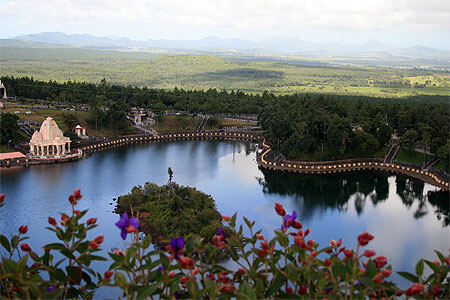
The sacred crater lake of Mauritian Hindus, watched over by a 33-metre Shiva statue, one of the island's two tallest along with the nearby Durga Maa. Colourful temples, playful monkeys and highland mists create a uniquely mystical atmosphere.

The east coast's iconic lagoon island: white sandbanks, translucent water and coconut palms make it the dream setting for catamaran trips. 18-hole golf course and every water sport.

From the Grand Baie jetty, sail past Coin de Mire and its tropicbirds, then anchor between Flat and Gabriel Islands: crystal-water snorkeling and BBQ on board.

A coconut islet about 2 km by 500 m in the lagoon, 500 m off La Gaulette. Photo stop (no landing) at Crystal Rock, a coral boulder rising from turquoise water, and snorkeling in a natural aquarium.

Every morning, pods of spinner and bottlenose dolphins come to rest in Tamarin and Black River bays. The dawn boat trip, sometimes with a swim, is the west coast's signature experience.
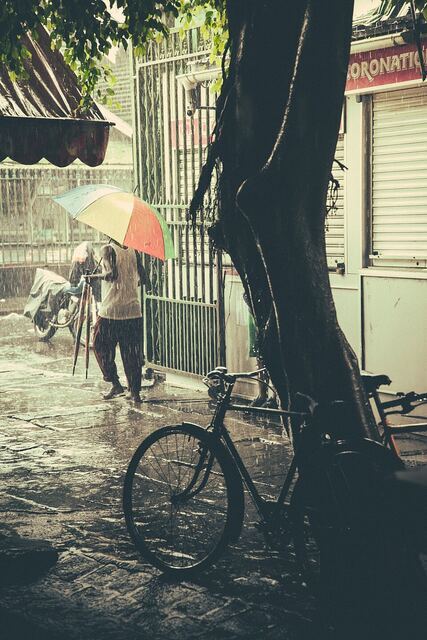
An institution since Victorian times, the central bazaar brims with tropical fruit, herbal teas, souvenirs and street food. This is where you feel the capital's pulse, between dholl puri stalls and hawkers.
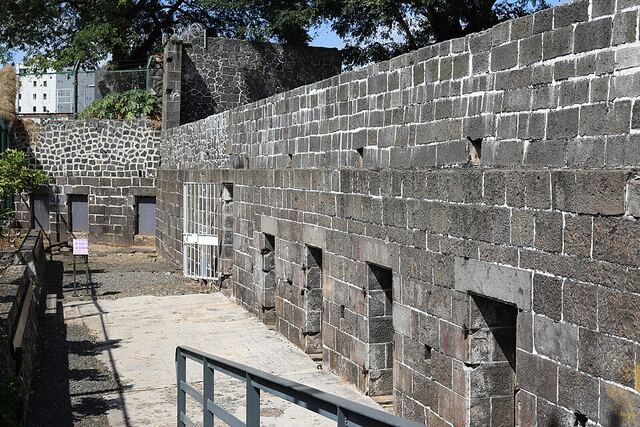
A UNESCO World Heritage site, this immigration depot processed half a million Indian indentured labourers between 1849 and 1923. A founding memorial of Mauritian identity.

The southern hemisphere's oldest botanical garden (1770), world-famous for its giant Victoria amazonica water lilies and talipot palms. Shady avenues, spices, baobabs and giant tortoises.
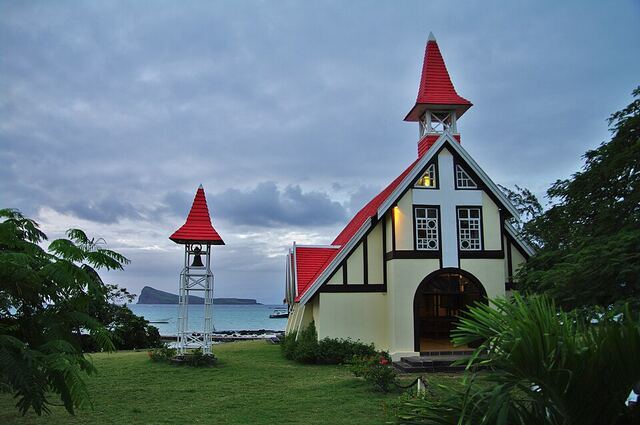
The famous red-roofed chapel facing the lagoon, with Coin de Mire as a backdrop: one of the most photographed views in Mauritius. The village marks the island's northernmost point.

Spectacular cliffs where the ocean pounds the coast with no lagoon to shield it. The wild beach below and the clifftop lawn offer one of the island's most dramatic panoramas.

A protected marine park in fifty shades of blue, rated the island's best snorkeling spot for its corals and multicoloured fish. The public beach, lined with casuarinas, gets lively at weekends.

A coral islet and nature reserve, open-air laboratory of the Mauritian Wildlife Foundation: pink pigeons, kestrels, day geckos and giant tortoises in Mauritius's last intact coastal dry forest.

A dormant volcano crater 300 m across in the middle of Curepipe, ringed by a shady promenade. On a clear day the panorama spans the central plateau and the western mountains.

A huge adventure park against Rempart mountain: bus safari among zebras and ostriches, giant tortoises, panoramic aviary, ziplines, quads and canyon swing. The west coast's number-one family outing.
Frequently asked questions
How many days do you need in Mauritius?
Three days are enough for the highlights from a base in the west, but a week is more comfortable to cover the north, south-west, Port Louis and the south-east. With ten days or more you can add the east coast and boat trips at an easy pace.
What is the most beautiful part of Mauritius?
The south-west is the most spectacular, with Chamarel, Black River Gorges and Le Morne. The north is best for beaches and catamaran trips, and the east for long quiet beaches and Île aux Cerfs.
Where should I stay in Mauritius to see everything?
The west coast (Flic en Flac, Tamarin) is the most central base for a short stay: Port Louis is half an hour away and Chamarel about 40 minutes. For a week or more, split your stay between the north and the west.
Which UNESCO sites are in Mauritius?
There are two: Aapravasi Ghat in Port Louis, inscribed in 2006, and the Le Morne Cultural Landscape, inscribed in 2008.
Do you need a car in Mauritius?
A car or a driver is almost essential for Chamarel, the gorges and the south coast, which are poorly served by buses. Journeys stay short: about an hour from the north to the south-east without traffic.