
Driving and renting a car in Mauritius: the 2026 practical guide
Renting a car is the freest way to explore Mauritius: Chamarel, the Black River Gorges or the wild south coast are hard to reach by bus. But traffic keeps left, roads are narrow and the Mauritian code is strict, especially on alcohol. Here are the rules checked against the Mauritius Police Force and official texts in October 2026: licences, speed limits, cameras, fines, parking, fuel, plus the alternatives to driving.
Traffic keeps left, often on narrow roads
As in the UK, Mauritius drives on the left, with right-hand-drive cars. Roundabouts are therefore taken clockwise. The first few kilometres need focus, especially when leaving the airport: set your mirrors and seat before you set off.
The UK government notes that accidents are common, that some roads are narrow with no pavements, and that motorbikes are slow and often ride without headlights at night. In villages, pedestrians, dogs and buses share the road: drive carefully, especially after dark, around 6pm to 7pm depending on the season.
Which driving licence do you need?
The Road Traffic Act allows holders of an international driving permit to drive in Mauritius, a term that includes foreign licences recognised by regulation. In practice, the UK authorities confirm a UK photocard licence is enough, and rental agencies accept national licences printed in Latin script, such as UK, EU or US licences.
Rental agencies usually apply a four-week limit on a national licence alone; beyond that, or if your licence is not in English or French, get an International Driving Permit in your home country and carry it with the original. Residents can obtain an IDP from the Traffic Branch (Rs 800). Always carry your licence when driving.
Speed limits and cameras
The official police schedule for cars: 110 km/h on motorways ('M' roads), 80 km/h on main 'A' roads, 60 km/h on 'B' roads, 40 km/h on 'C' roads and 30 km/h on streets. Motorbikes are limited to 80 km/h on motorways.
Fines: Rs 2,500 for up to 15 km/h over the limit, Rs 5,000 for 15 to 25 km/h, Rs 10,000 beyond 25 km/h. Fixed speed cameras operate across the island, managed by a Traffic Branch unit in Port Louis. The resulting notice (PEDN) must be paid at a District Court within 28 days.
Drink-driving: almost zero tolerance
The legal limit is very low: 20 mg of alcohol per 100 ml of blood, or 9 micrograms per 100 ml of breath. The UK government points out that this is a quarter of England's limit. One glass of rhum arrangé at lunch can be enough to exceed it.
For a first offence, the police list a fine of Rs 20,000 to Rs 50,000, up to 5 years in prison and at least 12 months' disqualification. If you plan a tasting at the Rhumerie de Chamarel, pick a driver who stays sober.
Paid parking and fuel
Street parking is paid in the centres of Port Louis, Curepipe, Quatre Bornes and Rose Hill. You pay with prepaid coupons sold in booklets at petrol stations and some shops, filled in and displayed behind the windscreen. At most public beaches, such as La Cuvette, parking is free.
Fuel prices are set nationally by the State Trading Corporation. Since 29 September 2026, petrol costs Rs 77.70 a litre and diesel Rs 78.35. Distances are short, but fill up before heading to Plaine Champagne or along the south coast, where stations are scarcer.
Mountain roads, the wild south and rush hour
The road linking Chamarel to Plaine Champagne, the Black River Gorges viewpoint, Alexandra Falls and Grand Bassin climbs in hairpins onto the plateau, where it rains far more than on the coast. On the south coast, between Baie du Cap, the Maconde viewpoint and Souillac, the road hugs the cliff: tight bends, little hard shoulder. These are still the island's most beautiful drives; do them by daylight and without rushing.
Around Port Louis, the motorway is jammed at the morning and late-afternoon peaks. Visit the capital in the morning and avoid crossing it around 3pm to 6pm. Allow plenty of time to reach the airport.
Without a car: Metro Express and buses
The Metro Express links Port Louis to Curepipe via Rose Hill and Quatre Bornes, with a branch to Réduit. Tickets are sold at station machines; the adult MECard costs Rs 200, including Rs 100 of credit. It is the easiest way to visit the capital without hunting for parking.
Buses cover the whole island cheaply from the Port Louis terminals, but journeys are slow. For the plateau, Chamarel or the wild south, a car for a few days, or a driver for the day, saves a lot of time.
Renting a car: prices and what to check
A small car rents from about Rs 1,200 to 1,800 a day in low season and Rs 1,800 to 2,800 in high season (December-January and July-August), according to the price barometer of RentCar.mu, a Mauritian rental service comparing licensed local agencies. Check the included insurance and the deposit, and photograph the car at pick-up.
Places in this guide

A unique geological phenomenon: volcanic clay dunes in seven ochre, red and violet hues that never mix. The geopark also hosts giant tortoises and the Chamarel waterfall lookout.

Mauritius's highest waterfall: a nearly 100 m curtain plunging from a basalt plateau into a lush green cirque. The viewing platform offers a striking panorama.

The island's most spectacular viewpoint: an amphitheatre of primary forest plunging towards the west coast, with endemic birds and fruit bats soaring below. Unmissable on the Plaine Champagne road.

From a walkway at 700 m, the view takes in the waterfall tumbling down the wooded cliff and the whole southern plain to the ocean. A short but memorable national-park stop.

A 700 m highland plateau crossed by Mauritius's highest scenic road, between Chinese-guava moors and native forest. Cool air, frequent mists and a string of viewpoints.
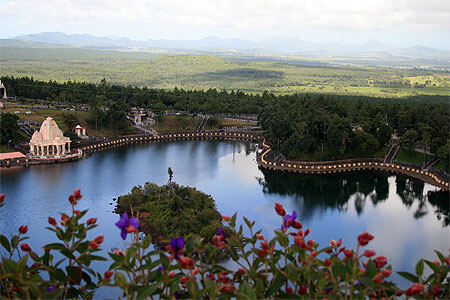
The sacred crater lake of Mauritian Hindus, watched over by a 33-metre Shiva statue, one of the island's two tallest along with the nearby Durga Maa. Colourful temples, playful monkeys and highland mists create a uniquely mystical atmosphere.

Spectacular cliffs where the ocean pounds the coast with no lagoon to shield it. The wild beach below and the clifftop lawn offer one of the island's most dramatic panoramas.

A few hundred metres from Gris Gris, this rocky headland seems to weep as waves break and stream down it. Some see in it the profile of Mauritian poet Robert-Edward Hart.

A legendary hairpin bend cut into the basalt, where a small lookout overhangs waves crashing on the rocks. Splendid view over the bay and the coastal road below.

A fishing village on a superb bay, along the island's most scenic coastal road between Le Morne and the wild south. The Matthew Flinders monument recalls the explorer's forced stopover in 1803.
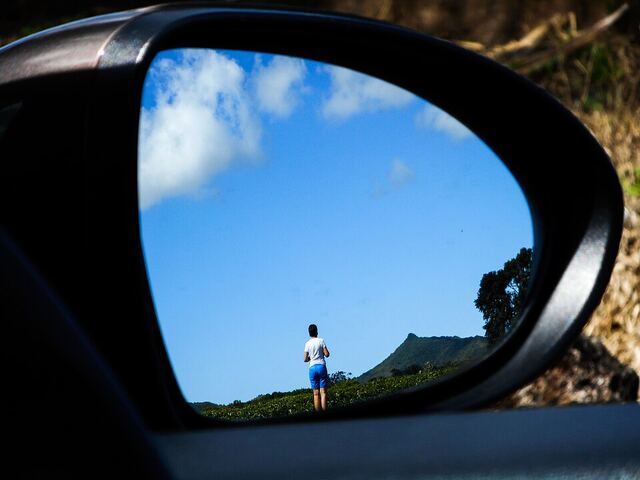
Mauritius's largest tea plantation: factory tour, tea museum and a tasting in a hilltop pavilion with an unbeatable view down to the sea.

A one-of-a-kind waterfall: the water drops over rectangular basalt columns carved by erosion, in the middle of the cane fields. The bravest dive from the rocks.

At the foot of Le Morne mountain, a lagoon in fifty shades of blue edged with immaculate sand and casuarinas. To the south, the 'One Eye' kitesurf spot ranks among the world's best.

A dormant volcano crater 300 m across in the middle of Curepipe, ringed by a shady promenade. On a clear day the panorama spans the central plateau and the western mountains.
Frequently asked questions
Can I drive in Mauritius with a UK or US licence?
Yes. Licences printed in Latin script are accepted by rental agencies for a holiday stay. For stays beyond four weeks, carry an International Driving Permit with your original licence.
What is the speed limit in Mauritius?
110 km/h on motorways for cars, 80 km/h on main roads, 60 km/h on secondary roads, then 40 and 30 km/h in built-up areas depending on the road type.
What is the drink-driving limit in Mauritius?
20 mg of alcohol per 100 ml of blood, or 9 micrograms per 100 ml of breath. A single drink can be enough to go over.
How much is petrol in Mauritius?
Since 29 September 2026, Rs 77.70 a litre for petrol and Rs 78.35 for diesel, the same price at every station.
Do you need a car in Mauritius?
Not strictly, but Chamarel, the Black River Gorges and the south coast are hard to reach by bus. A car for a few days is often enough.