
Best time to visit Mauritius: season by season, month by month
Mauritius works all year round, just not in the same way. The southern summer (November-April) is hot, humid and cyclone-prone; winter (June-September) is drier, cooler and windier; May and October are in-between months. Figures on this page are our own 2011-2025 averages (ERA5 reanalysis) by coast, alongside official data from the Mauritius Meteorological Services. Whether you want 28 °C water, whales, wind for kitesurfing or dry hiking trails, the best time changes.
The two seasons of Mauritius in brief
The Mauritius Meteorological Services describe a warm, humid summer from November to April and a relatively cool, dry winter from June to September, with October and May as transition months. The swing is modest: on the west coast, average highs run from about 25 °C in July to 30 °C from December to March, and lows from 20 °C to 25 °C.
The sea lags behind: around 28 °C from January to April, 27-28 °C in May, then 24-25 °C from July to October before climbing back to 26 °C in November and 28 °C in December. In winter the water is still swimmable, though a shorty wetsuit is welcome for diving.
Coast by coast: where the weather is best
The west (Flic en Flac, Tamarin, Le Morne) is the warmest and driest coast all year: about 15 mm of rain a month from July to September in our averages, against roughly 60 mm on the east coast. The north (Grand Baie, Trou aux Biches, Pereybère) is almost as dry.
The east (Belle Mare, Trou d'Eau Douce) takes the south-east trade winds head on: it is 1-2 °C cooler and noticeably wetter, especially in winter, though the breeze makes summer more bearable. The central plateau (Curepipe, Black River Gorges) is clearly wetter and cooler: average highs of 21 °C and lows of 16 °C in July-August, so pack a fleece and a rain jacket.
Cyclone season: mid-November to late April
In the south-west Indian Ocean, cyclone season officially runs from 15 November to 30 April, extended to 15 May for Mauritius. According to Météo-France, January and February are its heart, and March is still exposed. A cyclone does not hit the island every year, but a system passing offshore can bring two or three days of rain and wind.
Warnings are issued by the Mauritius Meteorological Services in four classes, all based on 120 km/h gusts: class I comes 36 to 48 hours ahead, class IV when such gusts are recorded. If you travel between December and March, get insurance that covers flight cancellations and follow metservice.intnet.mu.
Whales, dolphins and kitesurfing: activity seasons
Humpback whales pass off the west coast during the southern winter: operators in Tamarin and Black River name July to October as the best period, with sightings possible from June and sometimes into November. Bottlenose and spinner dolphins are seen all year. The law forbids swimming, diving or snorkelling with whales, and watching trips are only allowed from 6am to noon.
For kitesurfing at Le Morne, the trade winds are steadiest from June to September: our averages show maximum gusts around 30 km/h, against 22-26 km/h in summer. Hiking (Le Morne Brabant, Black River Peak, Le Pouce) is most pleasant from May to November, when it is less hot and the trails are dry.
Festivals through the year
The 2027 public holiday list, noted by Cabinet on 28 August 2026, gives these dates: Thaipoosam Cavadee on 22 January, Abolition of Slavery on 1 February, Chinese Spring Festival on 6 February, Maha Shivaratri on 6 March, Eid-ul-Fitr on 10 March (subject to moon sighting), Independence and Republic Day on 12 March, Ougadi on 7 April, Ganesh Chaturthi on 5 September (with the 6th also off), Divali on 29 October, All Saints' Day on 1 November, Arrival of Indentured Labourers on 2 November and Christmas on 25 December.
Highlights for visitors: Maha Shivaratri, when pilgrims walk to the sacred lake of Grand Bassin, the Spring Festival in Port Louis's Chinatown, and Divali, the festival of lights. The Père Laval pilgrimage to Sainte-Croix takes place every year on 8 and 9 September. Expect busy roads and sites on these days.
Crowds and prices: school holidays
Demand follows European school holidays: Christmas and New Year, Easter, and July-August above all, plus French half-terms (17 October to 2 November 2026, and staggered winter and spring breaks between February and early May 2027).
The festive season and the European summer are the busiest periods, so book flights and accommodation several months ahead. May, June, September and early October, outside school holidays, often combine pleasant weather with fewer visitors.
Our verdict by trip type
Beach and warm sea: April-May and November to early December, with the sea at 26-28 °C and low or early-season cyclone risk. Whales and kitesurfing: July to September. Hiking and sightseeing: May to November. Budget and quiet: May-June and September, outside school holidays. January to March still works, with the warmest sea, if you accept showers and keep your plans flexible.
Places in this guide

An open-sea trip beyond the reef from Tamarin: migrating humpbacks July-October, resident sperm whales visible year-round thanks to the west coast's deep drop-off.

A world-class spot: waist-deep turquoise lagoon for beginners, the legendary One Eye wave for experts, wind 300 days a year. Several schools right on the beach.

Every morning, pods of spinner and bottlenose dolphins come to rest in Tamarin and Black River bays. The dawn boat trip, sometimes with a swim, is the west coast's signature experience.
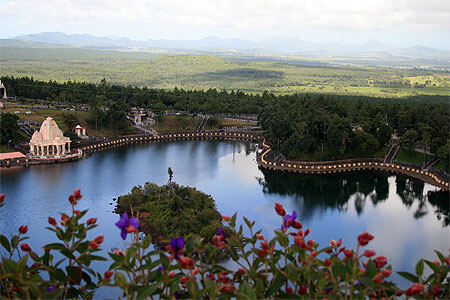
The sacred crater lake of Mauritian Hindus, watched over by a 33-metre Shiva statue, one of the island's two tallest along with the nearby Durga Maa. Colourful temples, playful monkeys and highland mists create a uniquely mystical atmosphere.

A 556 m basalt monolith and UNESCO World Heritage site, refuge of the maroon slaves whose symbol it became. The climb (3-4h return) rewards you with dizzying views over Mauritius's most photogenic lagoons.

A long stretch of fine sand shaded by casuarinas, regularly ranked among the Indian Ocean's finest beaches. Its shallow turquoise lagoon is ideal for swimming and snorkeling.

A vast powdery white-sand beach running for kilometres along a crystal lagoon. The east coast's postcard, famed for its blazing sunrises.

The west coast's longest beach: 8 km of white sand lined with casuarinas along a reef-protected turquoise lagoon. Grand sunsets, easy snorkeling and a local weekend vibe.

A protected marine park in fifty shades of blue, rated the island's best snorkeling spot for its corals and multicoloured fish. The public beach, lined with casuarinas, gets lively at weekends.

Mauritius's largest national park: 6,574 hectares of primary forest, 60 km of marked trails and the last refuges of the pink pigeon and kestrel. The 10 km Macchabée trail from Pétrin to the visitor centre is a classic.
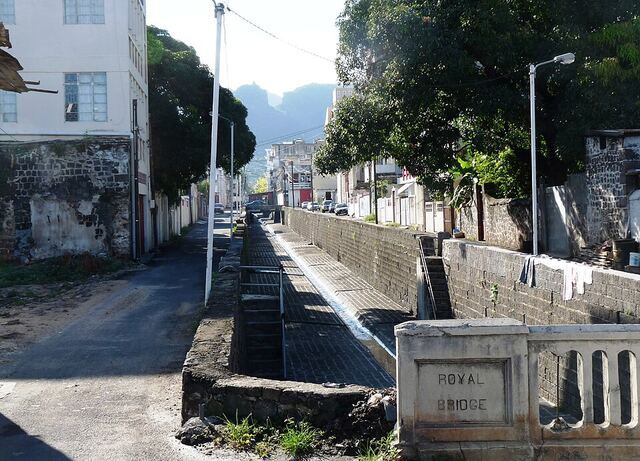
Between its two friendship gates, Chinatown lines up pagodas, century-old shops, street art and eateries serving dumplings and fried noodles. Mauritian multiculturalism distilled into a few streets.

Opened in 2021 at Les Salines, the first oceanarium in the Mascarenes: 45 tanks, 3,500 animals and 200 Indian Ocean species across 5,500 m². A modern, educational visit, ideal with kids or on a cloudy day.
Frequently asked questions
What is the best month to visit Mauritius?
For a balance of sunshine, warm sea and low cyclone risk, May, October and November are often the best choices. For whales and kitesurfing, aim for July to September.
When is cyclone season in Mauritius?
Officially from 15 November to 30 April in the south-west Indian Ocean, extended to 15 May for Mauritius. January and February are the peak, and March is still exposed.
Is Mauritius cold in July?
Not on the coast: around 25 °C by day and 20 °C at night on average. The central plateau is cooler, about 21 °C by day and 16 °C at night.
Which coast is best in the southern winter?
The west and north, sheltered from the south-east trade winds, are the driest and warmest from June to September. The east is windier and wetter.
When can you see whales in Mauritius?
Humpback whales are mostly seen from July to October off the west coast, on trips from Tamarin and Black River. Swimming with them is banned under Mauritian regulations.